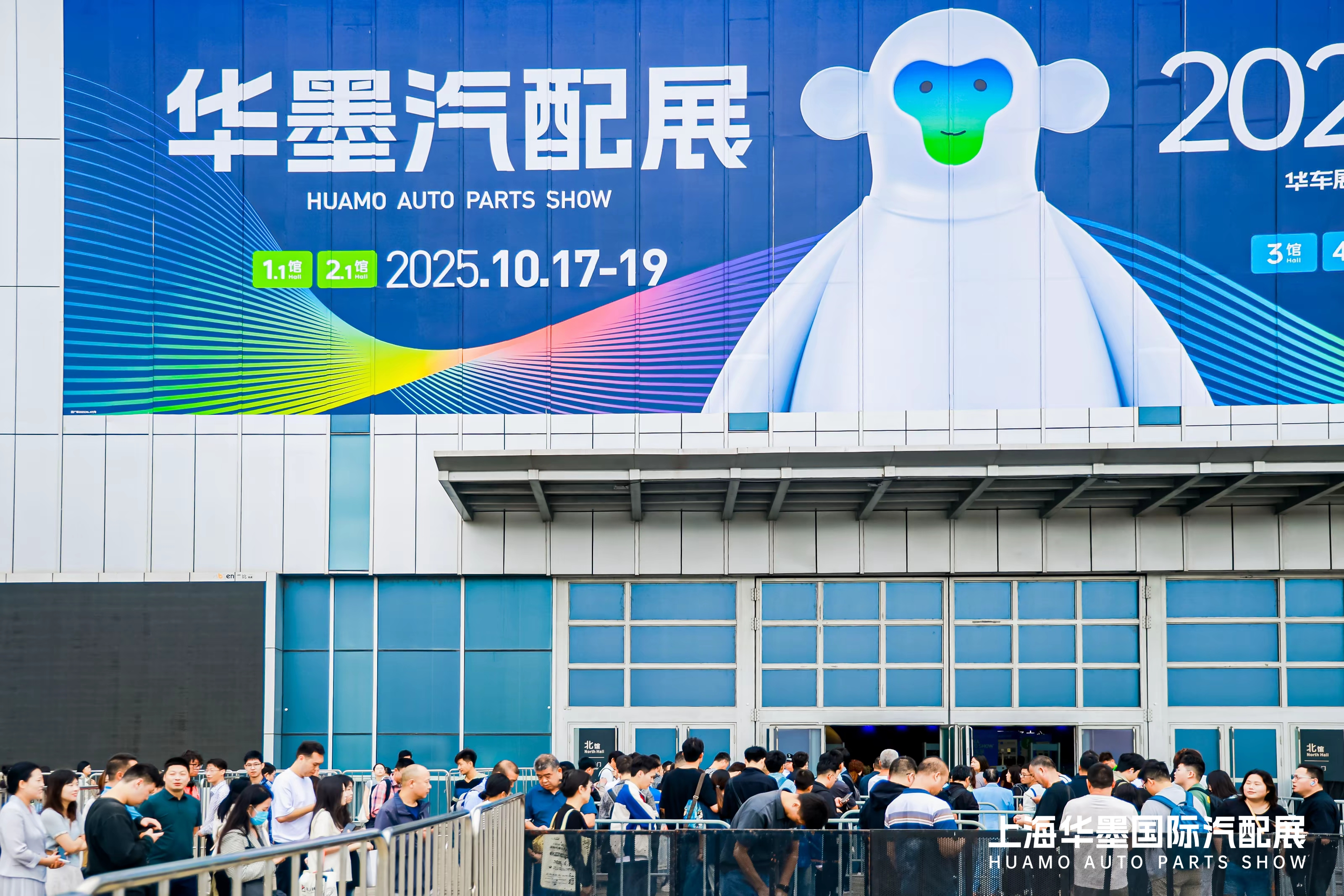
China Auto Parts Exhibitions: Your Guide to Key Industry Events
Industry news
2026-05-09
China’s automotive aftermarket now ranks as the world’s largest by volume, with over 340 million registered vehicles generating sustained demand for replacement parts, maintenance services, and technology upgrades. For suppliers, distributors, and procurement teams outside China, trade exhibitions remain the most efficient way to evaluate this market firsthand—compressing months of remote research into a few days of direct supplier contact, product inspection, and competitive benchmarking.
This guide covers the major China auto parts exhibitions worth attending, what each event offers, and how to extract maximum value from your participation.
How China’s Auto Parts Exhibition Calendar Maps to Sourcing Cycles
The timing of China’s major auto parts exhibitions follows a pattern that aligns with global procurement cycles. Spring shows (March–May) typically feature new product launches timed for the following model year, while autumn events (September–November) focus on aftermarket and replacement parts ahead of Northern Hemisphere winter demand.
Understanding this rhythm matters for sourcing decisions. If your goal is to qualify new suppliers for a product line launching in 18 months, spring exhibitions offer earlier access to prototypes and engineering samples. If you are filling gaps in current inventory or negotiating pricing for established SKUs, autumn shows provide more leverage—suppliers are often more flexible on MOQs and payment terms as they finalize annual targets.
I have seen procurement teams waste exhibition visits by arriving without a clear sourcing timeline. The companies that extract the most value treat these events as checkpoints in a longer qualification process, not as one-off shopping trips.
Which China Auto Parts Exhibitions Match Your Sourcing Priorities
Not all automotive trade shows in China serve the same audience. Some cater primarily to OEM suppliers with long qualification cycles and stringent technical requirements. Others focus on aftermarket distributors seeking competitive pricing on high-volume replacement parts. A few specialize in emerging segments like electric vehicle components or automotive electronics.
Here is a breakdown of the major events and their primary focus areas:
Exhibition
Primary Focus
Typical Venue
Frequency
CHN Auto Show
OEM components, new energy vehicles, aftermarket
Shanghai/Guangzhou
Annual
Auto Parts Asia
Manufacturing technology, precision components
Shenzhen
Annual
China Auto Aftermarket
Maintenance, repair, accessories
Beijing
Annual
EV Tech Expo China
Electric vehicle components, charging infrastructure
Shanghai
Biannual
Automotive Electronics Expo
ADAS, sensors, infotainment systems
Chongqing
Annual
The CHN Auto Show draws the broadest cross-section of the industry, making it a reasonable default choice for first-time visitors. However, if your sourcing needs are narrower—say, battery management systems or advanced driver-assistance sensors—the specialized events often deliver higher-quality supplier matches per hour invested.
One pattern I have noticed: buyers who attend multiple exhibitions in the same year tend to use the first event for broad discovery and the second for deeper due diligence on shortlisted suppliers. This two-stage approach reduces the risk of committing to a supplier based solely on booth presentations.
What Attending These Exhibitions Actually Delivers
The tangible benefits of attending China auto parts exhibitions fall into three categories: supplier discovery, competitive intelligence, and relationship acceleration.
Supplier discovery at scale is difficult to replicate through online sourcing platforms. Exhibitions compress hundreds of potential suppliers into a single venue, allowing side-by-side comparison of product quality, manufacturing capabilities, and communication responsiveness. You can physically inspect samples, ask technical questions in real time, and observe how suppliers handle pressure—all signals that are invisible in email exchanges.
Competitive intelligence comes from observing what other buyers are sourcing and which suppliers are attracting the most serious attention. The products featured prominently in exhibition halls often indicate where the market is heading. In recent years, lightweight materials, integrated sensor modules, and components designed for electric drivetrains have occupied increasingly prominent positions.
Relationship acceleration matters because Chinese business culture places significant weight on face-to-face interaction. A 30-minute conversation at an exhibition booth can establish more trust than months of remote correspondence. This is particularly true when dealing with mid-sized manufacturers who lack dedicated export sales teams—personal rapport often determines whether your inquiries receive priority attention.
If your situation involves qualifying suppliers for a new product category, it is worth scheduling exhibition visits early in your evaluation process rather than treating them as a final validation step.
How Foreign Companies Can Exhibit at Chinese Auto Parts Trade Shows
Exhibiting rather than just attending requires additional planning, but the visibility benefits can justify the investment—particularly for companies seeking to establish a presence in the Chinese market or attract regional distributors.
The registration process typically begins 6–9 months before the event. Most major exhibitions offer dedicated international pavilions with English-language support, simplified customs clearance for display materials, and booth packages that include basic setup and utilities. Costs vary significantly based on booth size and location; corner positions and spots near main entrances command premium pricing.
Practical considerations that often catch first-time exhibitors off guard:
Customs clearance for samples and display equipment requires documentation that proves the items will be re-exported after the event. Working with a local freight forwarder experienced in exhibition logistics can prevent delays that leave your booth empty on opening day.
Electrical standards differ from those in North America and Europe. Confirm voltage requirements and plug types for any equipment you plan to operate, and budget for adapters or local rental equipment.
Staffing decisions matter more than booth design. A well-designed booth with staff who cannot communicate effectively with Chinese visitors will underperform a modest setup with bilingual representatives who understand the local market. If your team lacks Mandarin speakers, hiring local interpreters or partnering with a Chinese distributor to staff the booth is worth the expense.
Lead capture systems should be planned in advance. Many exhibitions now support digital badge scanning, but the quality of follow-up determines whether those scanned contacts convert to actual business. Assign responsibility for post-show follow-up before the event begins, and set a target response time—ideally within 48 hours of the exhibition closing.
What the Exhibition Landscape Reveals About Industry Direction
The evolution of China’s auto parts exhibitions mirrors broader shifts in the automotive industry. Five years ago, traditional internal combustion engine components dominated floor space. Today, electric vehicle components, battery systems, and charging infrastructure occupy a growing share of exhibition halls—reflecting both policy incentives and genuine market demand.
Automotive electronics have expanded beyond infotainment systems to encompass advanced driver-assistance systems, sensor arrays, and vehicle-to-everything (V2X) communication modules. Exhibitions increasingly feature dedicated zones for these technologies, recognizing that the buyer profile for electronic components differs from that for mechanical parts.
Smart manufacturing technologies—robotic assembly, automated quality inspection, digital twin simulation—now appear not just in dedicated technology pavilions but integrated into supplier booths as evidence of production capability. For buyers evaluating supplier sophistication, these demonstrations provide useful signals about which manufacturers are investing in process improvement versus those relying on labor cost advantages alone.
The practical implication for exhibition planning: if your sourcing priorities have shifted toward electrification or advanced electronics, verify that your target exhibitions have kept pace. Some events that historically focused on traditional components have added new energy vehicle sections; others remain oriented toward the aftermarket for conventional vehicles.
When Exhibition Timing Aligns with Your Sourcing Calendar
The optimal time to visit China auto parts exhibitions depends on where you are in your sourcing cycle and which product categories you are evaluating.
Spring exhibitions (March–May) suit buyers who need to identify suppliers for products entering development. Lead times for tooling, sampling, and qualification in the automotive industry often stretch 12–18 months, so spring visits provide adequate runway for products launching the following year.
Autumn exhibitions (September–November) work better for buyers focused on pricing negotiations and volume commitments for established products. Suppliers approaching year-end are often more motivated to close deals, and the competitive environment at these events can provide leverage in negotiations.
Biannual specialized events like EV Tech Expo China offer opportunities to track rapid technology evolution in segments where product cycles are shorter than traditional automotive timelines. If your focus is battery technology or charging infrastructure, attending both spring and autumn editions of these events may be worthwhile.
Planning 3–6 months in advance is advisable for international visitors. This window allows time for visa processing, travel arrangements, and pre-show outreach to suppliers you want to meet. Waiting until the last month typically means higher travel costs and missed opportunities to schedule meetings with high-demand suppliers whose calendars fill early.
Practical Steps for Extracting Value from Your Exhibition Visit
The difference between a productive exhibition visit and a wasted trip often comes down to preparation and follow-through rather than what happens on the show floor itself.
Before the event, define specific objectives. Are you qualifying new suppliers for a particular component? Benchmarking pricing against current suppliers? Evaluating manufacturing technology trends? Vague goals like “exploring the market” tend to produce vague results.
Research exhibitors in advance using the exhibition’s online directory. Identify 15–20 priority suppliers and request meetings before you arrive. Suppliers with pre-scheduled appointments will allocate more senior staff and more time to your conversation than walk-up visitors receive.
During the event, allocate time for both scheduled meetings and open exploration. Some of the most valuable discoveries come from suppliers you did not know existed before walking the floor. Bring business cards in quantities that seem excessive—500 is not unreasonable for a multi-day event—and carry a portable phone charger.
Take photos of products, booth signage, and business cards with your phone immediately after each conversation. Memory fades quickly when you are meeting dozens of suppliers in a single day. Voice memos summarizing key points from each meeting can be transcribed later.
After the event, follow-up speed matters. Suppliers meet hundreds of potential buyers during an exhibition; the ones who respond within 48 hours stand out. Send a brief email referencing your specific conversation, attach any photos you took of their products, and include a clear next step—whether that is requesting samples, pricing, or a factory visit.
Frequently Asked Questions
How far in advance should I plan to attend an auto parts exhibition in China?
Three to six months of lead time is advisable for international visitors. This allows adequate time for visa processing, which typically requires 2–4 weeks, plus travel booking during periods when flights and hotels near major exhibition venues fill quickly. Early planning also enables pre-show outreach to priority suppliers, which significantly increases the productivity of your time on the show floor.
Are there specific visa requirements for international visitors to Chinese auto parts trade shows?
Most international visitors require a business visa (M visa) for trade show attendance. Requirements include a completed application, passport photos, and typically an invitation letter from the exhibition organizer or a Chinese business contact. Processing times and specific documentation requirements vary by country, so checking with your local Chinese embassy or consulate 8–10 weeks before travel is prudent.
What is the typical duration of major auto parts exhibitions in China?
Most major exhibitions run 3–4 days. This duration allows sufficient time to cover the exhibition floor, attend industry forums or technical seminars, and conduct follow-up meetings with priority suppliers. Specialized or regional events may be shorter, while the largest comprehensive shows occasionally extend to five days.
How important is language proficiency when attending these events?
English proficiency among exhibitors varies significantly. Larger manufacturers with established export operations typically have English-speaking sales staff, while smaller suppliers may communicate primarily in Mandarin. A translation app handles basic interactions, but for technical discussions or contract negotiations, hiring a professional interpreter is worthwhile. Even basic Mandarin greetings can improve rapport with suppliers who appreciate the effort.
To discuss specific sourcing requirements or exhibition planning, contact HUAMO EXPO at apeschina@huamogroup.com or +021-60280788.
If you’re interested, check out these related articles: