Automotive Sealing Exhibitions: Why Broad Auto Shows Win
Industry news
2026-07-05
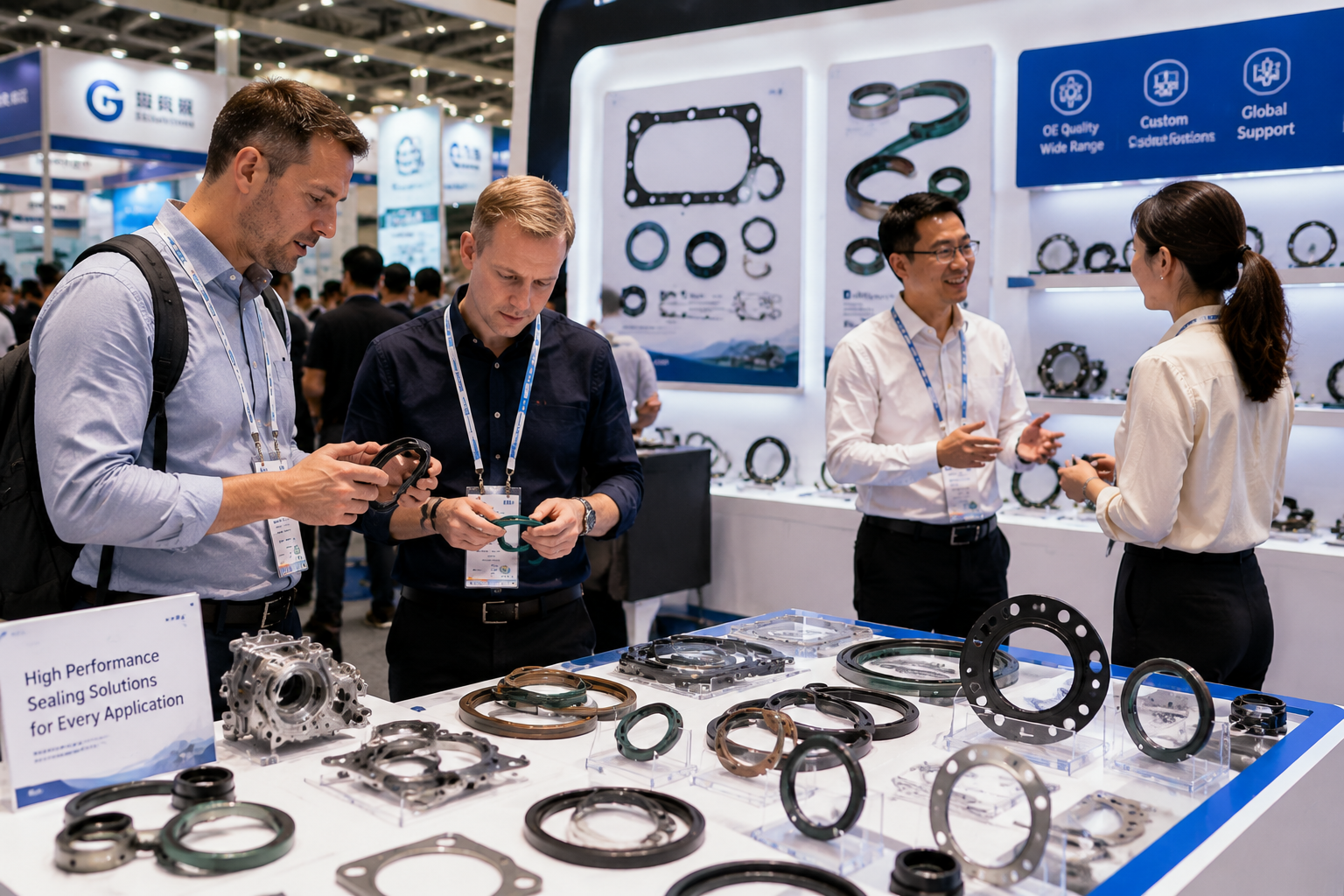
For sealing product manufacturers, choosing the right exhibition means more than booking a booth. It means positioning your components where they are seen by buyers who need them as part of a complete system. A broad-spectrum auto parts show puts oil seals, gaskets, O‑rings, and weatherstrips in front of engine, transmission, chassis, and EV thermal management buyers simultaneously. Niche sealing-only events cannot replicate that cross‑category traffic. At APES Auto Parts Expo Shanghai, over 35,000 buyers from more than 100 countries walk a floor that connects every automotive subsystem. Sealing products are not an afterthought here; they are embedded in the same sourcing journey that starts with a crankshaft and ends with a wiring harness.
The Limits of Niche Sealing Exhibitions
A dedicated rubber and seal expo attracts visitors who already know they need seals. That sounds efficient, but it limits discovery. A procurement manager sourcing a new water pump supplier may not search for a separate sealing exhibition. If the same manager walks an auto parts show and passes a booth displaying high‑temperature shaft seals alongside water pumps, the connection happens instantly. I have seen this pattern repeat across multiple industrial trade fairs: sealing component inquiries often originate from adjacent category aisles, not the sealing section itself. When a show isolates seals into a narrow product silo, it reduces incidental buyer engagement by design.
How Cross-Category Traffic Boosts Sealing Supplier Visibility
At a full‑spectrum automotive trade platform, every buyer category is a potential sealing product customer. The table below illustrates this hidden demand path.
Buyer Focus Area
Sealing Component Relevance
Engine parts
Cylinder head gaskets, valve stem seals, front and rear crankshaft seals
Transmission
Input shaft seals, output shaft seals, pan gaskets
A sealing manufacturer exhibiting near engine component suppliers becomes a logical stop for a buyer who just decided on a cylinder head. Not because the buyer searched for seals, but because the seals are right next to the part they came for. This adjacency effect is one of the strongest, and most under‑discussed, advantages of exhibiting in an integrated auto parts show.
If your sealing product line spans multiple vehicle systems, contact our team at apeschina@huamogroup.com to discuss how APES 2026 can map your booth location to the buyer categories that matter most.
Key Metrics to Evaluate an Auto Parts Show for Sealing Products
Not every large auto parts show serves sealing exhibitors equally. Three performance indicators separate the right platform from an expensive booth in the wrong hall.
Buyer origin diversity is the first filter. Sealing products ship into OEM assembly lines, aftermarket distribution networks, and independent repair channels. A show that draws 80 percent of its visitors from one region limits your export pipeline. APES 2026 pre‑registration data already shows buyer delegations confirmed from Southeast Asia, the Middle East, Eastern Europe, and Latin America — a spread that matches the export ambitions of most Chinese sealing manufacturers.
Buyer role concentration is the second filter. Do attendees include purchasing directors and engineering leads, or mainly sales representatives? Sealing components require technical discussions about material specifications, temperature ratings, and dimensional tolerances. Exhibitions that pre‑screen buyer seniority help your booth team spend time on conversations that convert.
Industrial cluster alignment is the third. China’s sealing manufacturing capacity clusters in regions like Hebei, Zhejiang, and Qinghe. A show that actively organizes manufacturer delegations from those clusters creates a denser supplier ecosystem, which attracts buyers seeking multiple sealing categories in one trip.
Preparing Your Booth to Attract OEM and Aftermarket Buyers
Sealing products are small, technical, and visually similar. That is a booth design challenge, not an excuse for a boring display. The most effective exhibitors at APES trade shows take a radically practical approach.
Place working samples at hand height, cut in half, next to the component they seal. A transmission output shaft seal displayed beside a cross‑sectioned tail housing tells a story in five seconds. Keep data sheets printed, laminated, and organized by vehicle application — not by part number. A buyer holding a worn seal wants to match it to the right model and material grade, not search a catalog. I have watched sealing exhibitors who stock only promotional brochures lose serious engineering buyers, while a table of cross‑referenced specifications held visitors for ten minutes or more.
Pre‑show buyer matching deserves its own budget line. The APES exhibitor platform releases verified buyer lists and sourcing signals four to six weeks before the show. Using that data to invite specific procurement teams to your booth transforms a passive exhibition into a scheduled business meeting series.
Reserving exhibition space for sealing products follows a predictable sequence, but early action determines booth location. Shell scheme packages with standard walls, carpet, and fascia are the quickest entry point and suit first‑time exhibitors. Raw space open‑floor designs work for manufacturers who want to bring a full product wall and meeting area. APES 2026 offers both formats across multiple halls at the National Exhibition and Convention Center (NECC) in Shanghai.
Begin with a product category declaration. Tell the organizer which sealing sub‑categories you manufacture—oil seals, rubber gaskets, O‑rings, weatherstrips—and the buyer regions you target. This data feeds the floor plan and the pre‑show buyer matching algorithm. Next, confirm your preferred hall zone. Engine and chassis halls cluster different buyer traffic; aligning your location to your largest customer category ensures higher incidental footfall. Finally, submit your booth application form and payment to lock in the space. The organizer then activates your digital exhibitor profile, which appears in the online sourcing directory weeks before the physical show opens.
Practical Questions About Exhibiting Sealing Products at Auto Parts Shows
Do buyers at general auto parts shows know what sealing products are?
Yes, but they think in systems, not components. A transmission buyer sees an output shaft seal as part of the transmission rebuild kit, not a standalone item. The opportunity for sealing exhibitors is to position themselves as the supplier that makes the entire kit possible. Display your seal next to the mating shaft or housing, and the buyer recognizes the application instantly.
Is it better to exhibit in a niche sealing show or a broad auto parts show?
It depends on the market stage you are targeting. If 80 percent of your current revenue comes from existing sealing‑specific distributor relationships, a niche show may reinforce that network. If you want to reach OEM procurement managers and tier‑one systems integrators who source dozens of component categories, a broad show like APES gives you access to buyer segments that will never walk into a dedicated sealing expo. Most Chinese sealing manufacturers with export ambitions find the broad platform returns a wider contact pipeline per yuan spent.
What documentation do I need to bring to an exhibition booth for sealing products?
At minimum, bring material specification sheets (NBR, FKM, VMQ, PTFE, etc.) with temperature and pressure ratings, a vehicle‑make‑model cross‑reference table, and a copy of your IATF 16949 or ISO 9001 certificate. Buyers evaluating your booth may also ask for PPAP documentation and sample test reports. Having those ready reduces post‑show email exchanges and shortens the sampling timeline.
How soon before the exhibition should I start reaching out to buyers?
Four to six weeks out, when the organizer’s buyer list and sourcing signal platform goes live, is the right window. Shortlist buyer companies that match your product categories and send a concise invitation with your booth number, the sealing sub‑categories you exhibit, and one high‑interest application example. This ensures your booth becomes a scheduled stop rather than a random walk‑by. Share your sealing product categories and target buyer regions with us at apeschina@huamogroup.com or call +021‑60280788, and we will align your booth placement with pre‑registered buyer interests before the floor plan closes.
If you’re interested, check out these related articles: