NEV Parts Exhibition China: Sourcing via Industrial Clusters
Industry news
2026-07-07
Sourcing NEV parts at a China exhibition is the most efficient way to connect with dozens of specialized manufacturers across multiple clusters in one trip. Rather than spending weeks visiting factories in different provinces, a well-organized trade show brings together the key players from Zhejiang’s precision components hub to Hubei’s commercial vehicle centers. This article outlines how to use these cluster-integrated events to streamline supplier evaluation, verify quality, and build long-term supply partnerships.
NEV Parts Sourcing in China Starts with the Right Exhibition
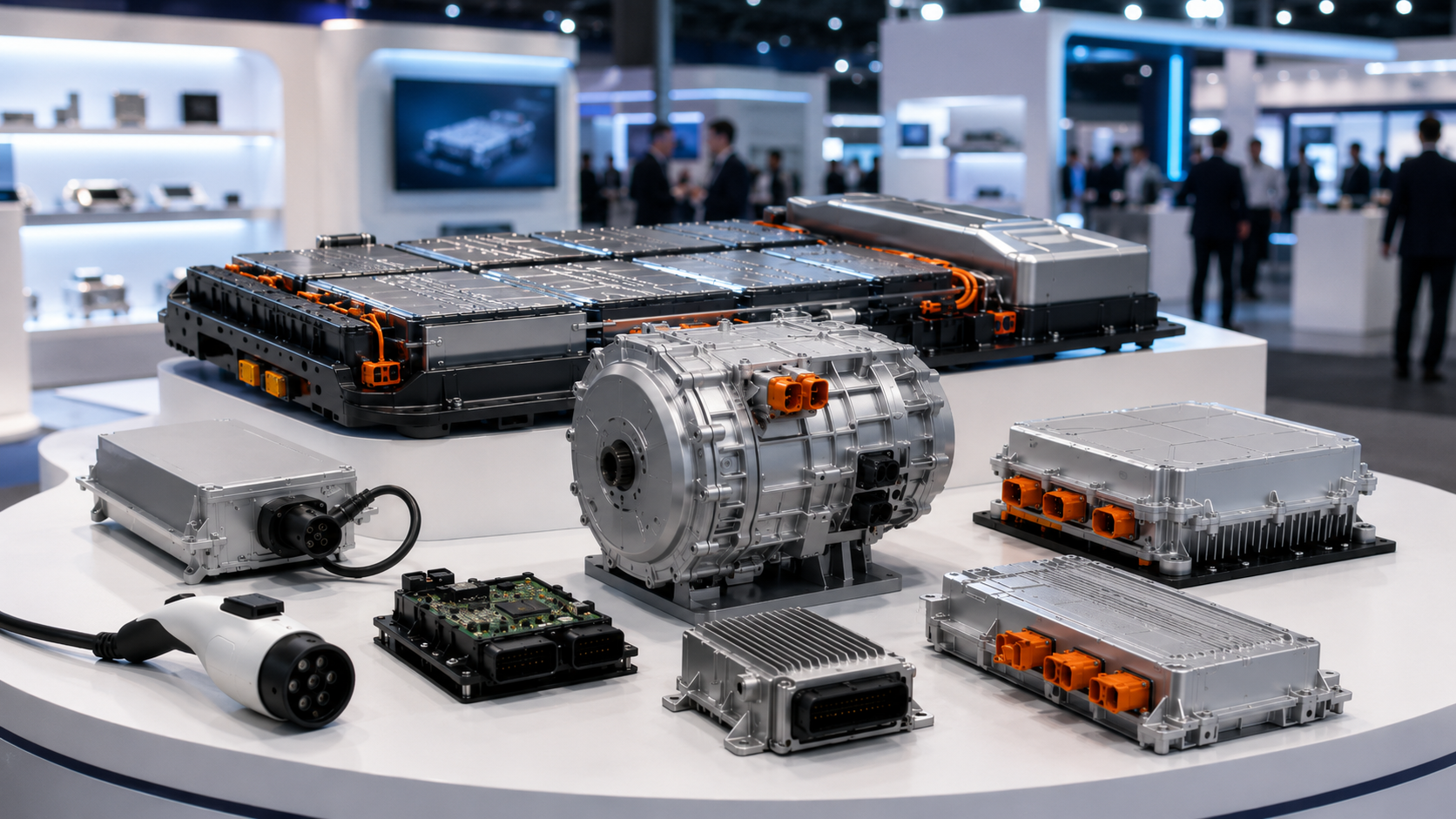
Touring scattered factories across China to find new energy vehicle component suppliers sounds thorough. It can quickly become a logistics drain. A single well-structured exhibition compresses that search into three days of structured meetings under one roof. From high‑voltage wiring harnesses to electric motor shafts and battery structural parts, manufacturers showcase their full production capabilities without a buyer needing to step outside the hall.
The real value lies in concentration: an exhibition that curates exhibitors by manufacturing region, not just by product category, saves a procurement team dozens of follow‑up trips. Instead of first identifying a region, then finding a contact, then arranging a visit, you walk aisle to aisle where each booth represents a verified production base. This is where the distinction between a generic auto parts show and a cluster‑centric one becomes critical.
How Cluster-Based Exhibitions Simplify Global Sourcing
Most international trade shows assemble suppliers as individual companies. A cluster‑based exhibition structures its footprint around manufacturing ecosystems: the Ruian brake cluster, the Wenzhou automotive electronics cluster, the Changzhou lighting cluster, and others. Each zone replicates the regional supply chain, so a buyer can evaluate an entire production environment—not just one factory’s output.
How do cluster‑based exhibitions differ from traditional auto parts trade shows?
In a conventional show, a brake pad manufacturer from Ruian might sit next to a lighting supplier from Changzhou. There is no logic linking them. At a cluster‑curated exhibition, those same Ruian brake companies are grouped together. A buyer can compare processes, tolerances, and pricing within walking distance. This format also reduces the risk of encountering trading companies posing as manufacturers, because the group presence makes it easier to cross‑check factory references.
Which Chinese manufacturing clusters are most relevant for NEV parts?
Several clusters have built deep expertise around electric vehicle components. Zhejiang’s Yuhuan area leads in chassis and steering parts adapted for NEV platforms. Ruian specializes in braking systems now widely used in EVs. Wenzhou’s electronics cluster supplies sensors, actuators, and control modules. Changzhou dominates automotive lighting, including LED and adaptive headlamp systems for new energy vehicles. Hebei’s Qinghe is the national hub for filtration products. Shiyan in Hubei remains the central source for commercial vehicle NEV parts. A single exhibition that maps these clusters physically allows a buyer to benchmark quality and cost across regions on the same day.
Key NEV Component Categories Shown at Chinese Trade Fairs
Exhibitions focusing on new energy vehicles tend to group components into distinct functional blocks. This helps buyers with focused needs avoid wasted time.
This kind of categorization reflects how R&D departments think about a vehicle platform, not just how a parts catalog is organized. Buyers can move from the drive unit zone to the battery structural zone without crossing unrelated product lines.
Which NEV components are most commonly sourced at Chinese exhibitions?
Global procurement teams consistently look for electric motor shafts and high‑voltage wiring harnesses because China’s production scale in these two categories is unmatched. Motor shafts require precision forging and grinding capacity that many regions lack; Chinese manufacturers in Taizhou and Ningbo have invested heavily in automated lines. High‑voltage harnesses, meanwhile, benefit from China’s integrated copper supply chain and assembly automation. Exhibitions let buyers inspect connector sealing and shielding techniques directly.
If your program involves high‑voltage components with strict certification requirements, confirming a supplier’s testing documentation on the exhibition floor is far more effective than relying on brochures. Reach out at apeschina@huamogroup.com before the show to identify pre‑vetted exhibitors aligned with your target specifications.
How can I evaluate high‑voltage components on the exhibition floor?
At the booth, request to see the latest test reports for dielectric withstand and insulation resistance. Genuine manufacturers will have them printed or ready on a tablet. Ask about their connector supplier; if they source Tier‑1‑grade connectors from a known brand, it signals a higher tier of production quality. If the salesperson deflects to a catalog, move on.
NEV Parts Manufacturing Clusters and Their Specializations
Each cluster has a distinct history that determines its strengths. That history also tells you what to push back on.
What regions specialize in high‑voltage wiring harnesses?
The Yangtze River Delta—centered on Suzhou, Kunshan, and Ningbo—dominates this category. These cities host factories that supply both domestic EV brands and export markets. At a show, a buyer should walk from one harness booth to the next comparing conductor material, terminal crimping standards, and the level of automation visible in the production videos. If a supplier cannot produce at‑scale footage, they are likely a small‑batch operation.
Where can I find reliable battery structural component suppliers?
Most structural component work centers on Changzhou and Nanjing in Jiangsu province, where aluminum extrusion and friction stir welding capabilities are concentrated. For battery tray assemblies, the key question is whether the supplier can do the complete module‑level leak test in‑house. Second‑tier shops outsource this, which adds a quality layer and delays. A direct manufacturer will offer to show the test station on video during the booth meeting.
Verifying Supplier Quality at the Exhibition
The floor is full of polished displays. The real sorting happens when you ask for evidence.
What certifications should I look for in NEV parts suppliers?
IATF 16949 remains the baseline for any supplier claiming automotive series production. For NEV‑specific high‑voltage components, look for ISO 6469‑3 compliance documentation in addition to the general quality system certs. Ask to see the certificate number and issue date—not just the logo on a brochure. In my experience organizing large‑scale B2B automotive events, the most capable suppliers bring not only their sales team but also a quality engineer to the booth. When a booth has an engineer present, the conversation shifts from pricing to process capability within the first two minutes. That alone filters out half the hall.
How can I identify genuine manufacturers vs. traders at the booth?
Straightforward question: “Can you show me your factory’s production schedule for this month?” A manufacturer knows their line utilization. A trader will stumble. Also ask for the address of the nearest third‑party testing lab they use; a real factory has a specific lab relationship, not a vague answer. The cluster format makes this vetting easier because neighboring booths may use the same local testing facilities, and a buyer can cross‑reference.
From Contacts to Contracts: Post-Show Follow-Up
The exhibition ends when you leave the hall. The sourcing cycle starts the moment you consolidate your notes. Flag every supplier that passed the video‑evidence and engineer‑present tests. Within 72 hours, send a short email outlining your component specifications, annual volume estimate, and a request for a formal quotation including lead time and shipping terms. Suppliers who reply within two business days with a complete commercial offer are your shortlist.
Do not treat every business card equally. The suppliers who demonstrated production depth on‑site are the ones who will deliver consistency when orders ramp. Clusters teach you that regional capability matters, but individual factory execution is what wins programs.
For serious NEV parts buyers, a cluster‑integrated exhibition is the most efficient first step into the Chinese supply chain. To receive a curated map of exhibitor locations organized by manufacturing cluster and component category, send your target part numbers and volume requirements to apeschina@huamogroup.com or call +021-60280788. Our team will align your visit with the right factory booths before you arrive.
Common Questions About NEV Parts Sourcing at Exhibitions
Can large trade shows really deliver factory pricing, or are those just list prices?
Most exhibiting manufacturers bring their decision‑makers to the show precisely because they expect to negotiate. Price discussions at the booth often reflect recent raw material costs and current production capacity. You can get genuine factory‑direct pricing, especially if you bring a volume range and not just a sample request. In programs I’ve supported, buyers who arrive with a 12‑month forecast consistently secure 5–12% below standard export price lists.
How do I arrange a business visa for an automotive trade show in China?
The exhibition organizer provides an official invitation letter for registered buyers. Submit this with your visa application, a travel itinerary, and proof of business registration in your home country. Processing times vary by country, so plan at least four weeks ahead. Many embassies now process trade fair visa applications in a dedicated fast‑track lane.
Are Chinese NEV components held to the same quality standards as European or North American ones?
The top‑tier Chinese NEV component manufacturers operate under IATF 16949 and comply with international testing protocols. The challenge is identifying which factories belong to that tier. A cluster‑based exhibition helps because the concentration of industry peers makes underperforming suppliers visible. When a brake manufacturer from Ruian stands next to five competitors, only the capable ones survive buyer scrutiny. The key is not the country of origin but the specific supplier’s documented process control and testing infrastructure.
What is the difference between shell scheme and raw space booths, and does it reflect company size?
Shell scheme booths are pre‑built 9-square-meter units with walls and fascia, common among smaller manufacturers. Raw space is unfinished floor area that the exhibitor custom‑builds. Large manufacturers with complex product displays usually take raw space because they need to bring actual components, testing demo rigs, and production videos. Size is a rough signal, but always judge by the technical depth of the booth staff rather than the square meters alone.
How do I compare suppliers efficiently when there are hundreds of NEV‑related booths?
I recommend grouping suppliers by the manufacturing cluster zone first, not by product code. Within a cluster, walk through and compare the same capability: ask each booth the same technical question and note who answers with process detail versus sales script. By the second aisle, patterns emerge. The supplier who shows you a production film and a test report unprompted is the one worth the extended conversation. If you want to receive a pre-show exhibitor list organized by cluster and product category, send your requirements to apeschina@huamogroup.com and we’ll help you map a targeted walk‑through.
If you’re interested, check out these related articles: