Rubber Oil Seal Manufacturer China Fair: How to Verify Real Suppliers
Industry news
2026-07-06
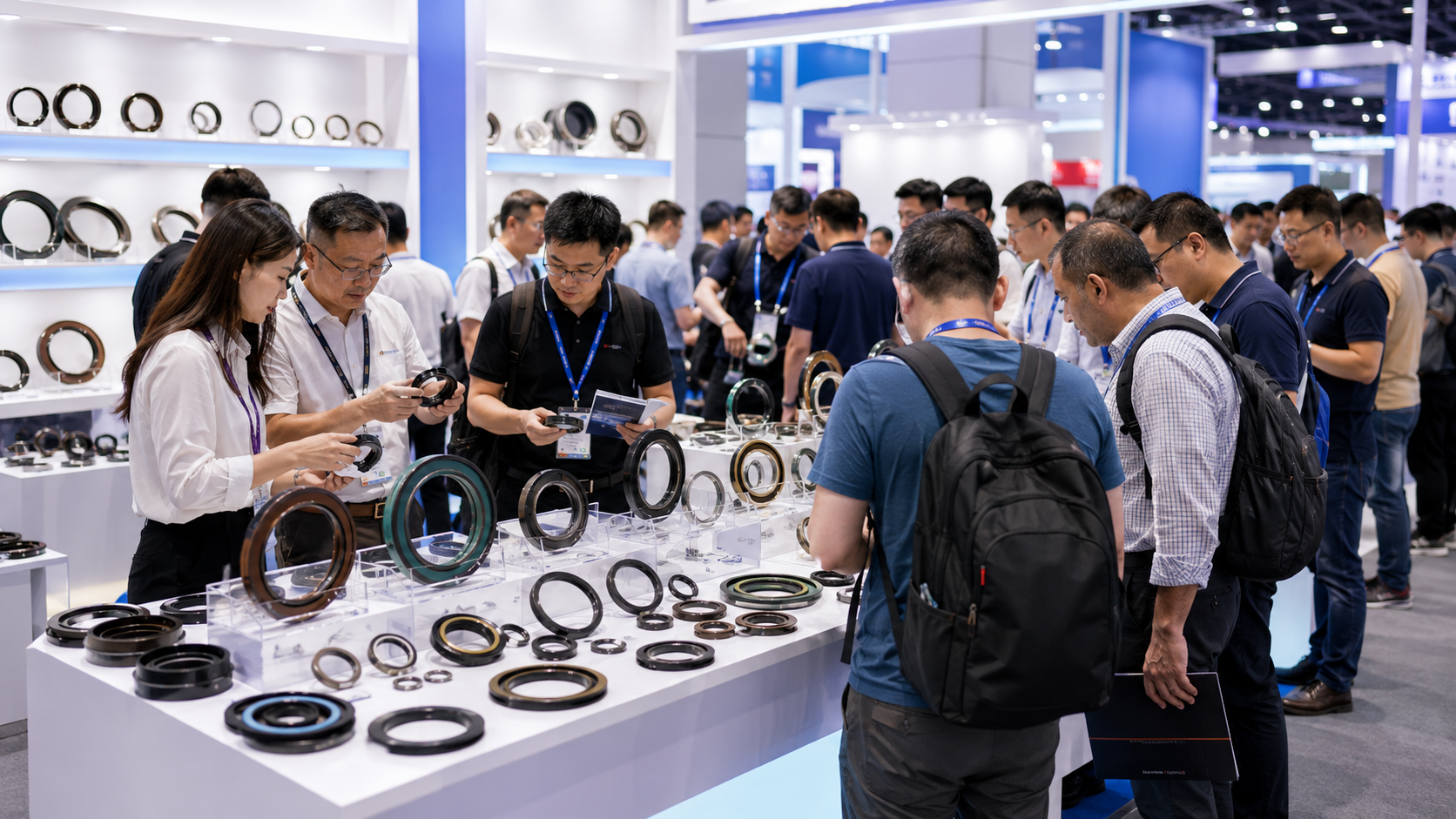
Attending a rubber oil seal manufacturer China fair is one of the fastest ways to cut out middlemen, compare factory capabilities side by side, and lock in competitive pricing. But the value of the trip depends entirely on your ability to distinguish a genuine production facility from a trading company renting a booth. Over years of organizing automotive trade exhibitions, I have seen countless buyers walk past the very suppliers they needed because the exhibitor’s booth signals were misread. This guide breaks down the on-site verification techniques that turn a routine exhibition visit into a reliable sourcing channel for rubber oil seals.
The Strategic Advantage of Sourcing Rubber Oil Seals at China Trade Fairs
Buying rubber oil seals in person at a Chinese exhibition solves two major sourcing problems at once: trust and cost. Instead of relying on website photos and emailed spec sheets, you can handle samples, discuss compound formulations face to face, and gauge the manufacturer’s production environment through conversation quality alone. The sensory check—feeling the seal’s flexibility, inspecting flash removal, and hearing the level of technical detail in an engineer’s response—provides data no online catalog can replicate.
At the same time, multiple suppliers from key rubber seal manufacturing clusters such as Taizhou, Zhejiang, and Hebei exhibit under one roof. This concentrated access transforms the sourcing process from a months-long vetting exercise into a two-day comparison exercise. For procurement managers responsible for sealing systems in automotive, hydraulic, or industrial applications, the efficiency argument is difficult to overstate.
Top China Fairs Where Rubber Oil Seal Manufacturers Exhibit
China hosts several automotive and industrial parts exhibitions annually, but for rubber oil seals specifically, the most productive events are those that attract manufacturers from the industrial clusters rather than just distributors.
OEM/aftermarket rubber seals, rotary shaft seals, custom compounds; exhibitors mainly manufacturers from Zhejiang and Jiangsu
Automechanika Shanghai
Shanghai
Broad auto parts; rubber seals present but mixed with distributors
Canton Fair (Phase 1)
Guangzhou
Industrial rubber seals, general rubber products; fewer specialized auto seal makers
CAPAFAIR Ningbo
Ningbo
Rubber parts including seals; regional focus, smaller scale
APES Auto Parts Expo Shanghai stands out for buyers targeting rubber oil seals because of its deliberate aggregation of manufacturers from China’s automotive sealing industrial clusters. The exhibitor qualification process screens for production capability, which means most booths in the sealing components zone represent actual factories rather than trading firms.
If your product specifications require a specific rubber compound—nitrile, silicone, or fluoroelastomer—APES typically draws several competing manufacturers who can discuss compound properties and tooling lead times on the spot. This depth of technical conversation is harder to find at more generalized fairs.
Identifying Genuine Rubber Oil Seal Manufacturers at the Booth
The most important skill at any rubber oil seal manufacturer China fair is quickly screening whether the person you are talking to works for a factory or a reseller. I have found that three observation points consistently separate the two.
Booth staff knowledge level. A factory representative can explain the curing process, mold design, and flashing removal method without referring to a phone or brochure. If you ask about the compound’s compression set at elevated temperature and the response drifts into generic sales language, you are likely speaking with a trading company.
Exhibitor credentials and documentation. Genuine manufacturers display IATF 16949 or ISO 9001 certificates with the factory name matching the booth company name. Request a copy of the certificate and check the address against the factory location. If the representative hesitates or offers only a blurred photo, that is a red flag.
Sample quality and range. Manufacturer booths typically show a wider range of rubber oil seal profiles and sizes than trading companies, which tend to display only the fastest-moving references. Look for less common sizes or custom profiles—their presence indicates the supplier actually produces rather than resells.
During a past exhibition, I observed a buyer correctly identify a trading company by noticing that the booth’s sample display included only standard single-lip oil seals while their inquiry was for a double-lip fluoroelastomer seal. The booth could not produce a relevant sample or explain the tooling modification required. That sort of quick field test is worth a hundred online searches.
Evaluating Rubber Oil Seal Quality from Exhibition Samples
Exhibition samples are made to look perfect, but close inspection of three characteristics gives you real insight into the manufacturer’s quality control.
Flash and parting line consistency. After demolding, every rubber seal carries a parting line where the mold halves meet. High-quality production uses post-cure trimming to remove excess material cleanly. Run your fingernail along the sealing lip edge. If you feel a rough ridge or inconsistent trim, that factory either lacks proper finishing equipment or tolerates variability.
Material feel and rebound. Press the seal between your thumb and forefinger and release it. The rubber should rebound quickly without permanent deformation. A slow recovery suggests excessive filler content, which compromises sealing performance. Also note whether the material feels uniformly smooth. Surface tackiness often points to undercured compound or contamination during mixing.
Compound transparency from the exhibitor. A manufacturer that openly shares the specific rubber grade—such as NBR 70 Shore A or FKM with a temperature range of -20 to 200°C—demonstrates confidence in its material sourcing. If you ask about the base polymer source and the answer is vague, assume cost-driven substitution is part of the business model.
If you are evaluating multiple suppliers, I suggest preparing a small comparison card with these three criteria and scoring each booth you visit. It keeps the data consistent across a long trade show day.
If your rubber oil seal specification involves an unusual compound combination or a tight dimensional tolerance, confirming that a supplier has the right compound lab and mold-making capability is non-negotiable. I recommend reaching out before the fair so our team can identify manufacturers with the right technical alignment—contact apeschina@huamogroup.com.
Negotiating Factory Pricing and Minimum Order Quantities at the Fair
Exhibition pricing tends to be more aggressive than online quotes because manufacturers are competing directly against neighboring booths. Use this to your advantage.
Begin the conversation by specifying the exact dimensions, compound, and quantity range before asking for a price. This signals you are a serious buyer who understands the product. When the supplier gives the first quote, ask for the FOB price per piece at two quantity levels: trial order (typically 5,000 to 10,000 pieces) and container load. This reveals the supplier’s cost structure immediately.
For minimum order quantities, many rubber seal factories start at 5,000 pieces per reference, but some will accept 1,000 for stock sizes. If you need a lower MOQ, offer to pay for tooling separately or agree to a price adjustment mechanism once annual volumes materialize. Exhibition-floor negotiations often allow these flexibilities because the supplier wants to add a new buyer to their post-show report.
Our team has seen buyers leave an APES exhibition with signed memorandums for multiple trial orders after two days of systematic booth visits. The key is not to negotiate one supplier in isolation but to collect three comparable offers and let the market define the fair price.
Securing Your Rubber Oil Seal Supply Through Post-Fair Follow-Up
The real risk after any busy exhibition week is that the momentum slips away. Suppliers will have spoken to dozens of buyers and might prioritize those who follow up with a clear, documented request. I have seen buyers lose pricing advantages simply because they waited a week to send their summary email.
To lock in the exhibition-floor terms, I recommend that within three days of the event, you send each shortlisted manufacturer a structured recap: reference number, quantity, compound specification, agreed price unit, and a request for a formal proforma invoice. This transforms a casual booth conversation into a commercial record.
Before committing to a production order, insist on a remote factory walkthrough. Request to see the mixing room, compression molding line, and QC lab. If the manufacturer cannot accommodate a live video call within a reasonable time, treat that as a material risk regardless of how polished the exhibition display looked.
APES Auto Parts Expo Shanghai also supports buyers post-show through exhibitor matchmaking and communication facilitation, ensuring that the contacts you made are not lost in the post-fair inbox clutter. If your sourcing priority is rubber oil seals and you need assistance identifying manufacturers with the right compound and tooling capabilities, reach out to our team at apeschina@huamogroup.com or call +021-60280788. We can connect you with verified suppliers who match your technical requirements.
Common Questions About Sourcing at Rubber Oil Seal Exhibitions in China
Can I get factory-direct pricing at an exhibition even if I place a small trial order?
Yes, but only if you negotiate the trial order pricing during the fair itself. The exhibition period is when factories are most willing to accept lower initial volumes to start a new buyer relationship. After the event, standard MOQ policies tend to return. Secure a written quote at the booth.
How do I know if the rubber seal sample I received is representative of production quality?
Exhibition samples are typically production-spec, but request a written commitment that production pieces will match the sample’s compound and dimensions. Additionally, include a quality clause in your purchase agreement that ties acceptance to a first-article inspection report. This creates legal alignment between the sample and the actual shipment.
Is it safe to place an order with a manufacturer I met at a Chinese fair without visiting the factory?
Thousands of professional buyers do this successfully each year, but the risk can be managed. Always conduct a remote factory audit via video call, check the company’s export history with previous buyers if possible, and start with a small trial order of non-critical stock sizes. Platforms like APES that pre-screen exhibitors reduce the baseline risk, but your own due diligence remains the final layer of protection. If your program specifies a challenging compound requirement or a tight tolerance, share your requirements with us at apeschina@huamogroup.com and we will help you shortlist qualified manufacturers before the next exhibition.
If you’re interested, check out these related articles: