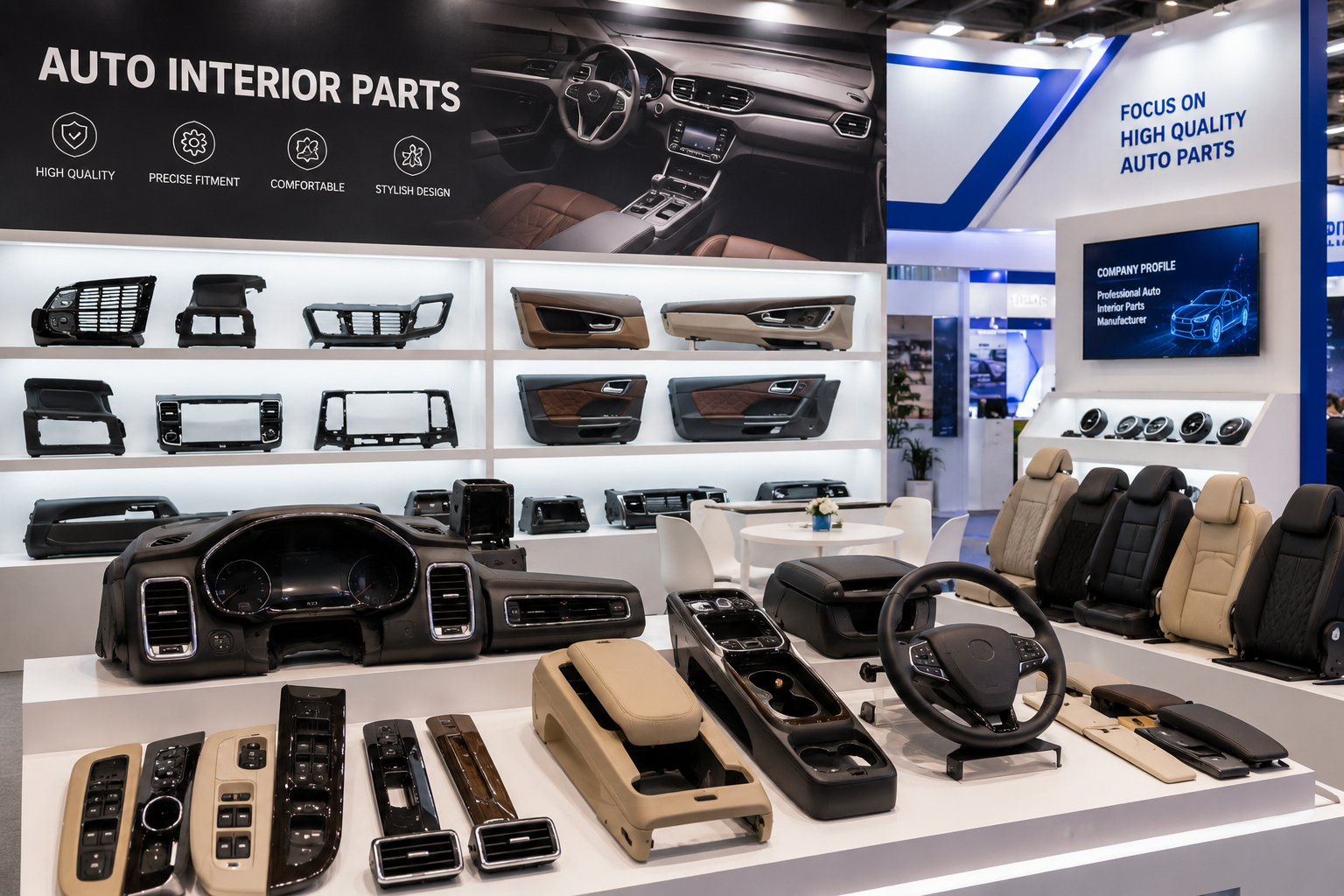
Master Auto Interior Parts Exhibition China: Sourcing Guide
Industry news
2026-06-26
Walking through the massive halls of an auto interior parts exhibition China, you see hundreds of supplier booths displaying dashboards, seat covers, and door trim panels. But without a clear sourcing strategy, those impressive displays can turn into a time drain. Over the past decade, I’ve seen too many international buyers leave Chinese trade fairs with a stack of brochures and zero actionable supplier leads. This guide cuts through the noise. We’ll focus on how to identify qualified interior component manufacturers, verify material compliance on the spot, and build relationships that extend beyond a single exhibition. By the end, you’ll have a repeatable process for converting exhibition visits into reliable supply partnerships.
Understanding China’s Auto Interior Parts Exhibition Landscape
China hosts several large-scale automotive trade fairs, but the ones focused on interior components typically feature a mix of OEM and aftermarket suppliers. The most effective events cluster manufacturers by industrial regions: Yuhuan for chassis and mechanicals, Changzhou for lighting, and other hubs that also produce interior parts like center consoles and trim. At an exhibition like APES Shanghai, you can find entire halls dedicated to interior subsystems—from injection-molded plastic components to cut-and-sew upholstery.
Key exhibition segments include: – Cockpit electronics (instrument panels, head-up displays) – Seating systems (foam assemblies, leather wrapping) – Interior trim (door inserts, dashboard garnishes) – Acoustic and thermal insulation
Understanding this segmentation helps you plan booth visits and avoid wandering through halls that don’t match your sourcing needs.
Pre-Show Strategy: Setting Clear Sourcing Goals
The buyers who get the most out of an auto interior parts exhibition China are those who arrive with a detailed brief. Before you book your flight, answer three questions:
Which interior sub-system are you sourcing? Specify the part numbers or at least the SAE category.
What volume and price target? Know your MOQ and target cost to filter suppliers quickly.
Which certifications are non-negotiable? For interior parts, common requirements include FMVSS 302/301 flammability, VOC emissions limits per GB/T 27630, and IATF 16949 quality systems.
Use these answers to shortlist exhibitors from the floor plan. Contact them 2–3 weeks before the show to request a preliminary quote and material data sheet. Suppliers who hesitate to share technical data before the event often lack the documentation you’ll need later.
At the Exhibition: How to Evaluate Interior Parts Suppliers
When you walk into a booth, the first thing to check isn’t the product—it’s the documentation on the table. A well-organized supplier will have sample material certs, test reports from third-party labs (SGS, TÜV), and a QR code linking to their production line video. This signals operational transparency.
Spend the first five minutes of each meeting asking about their experience with your specific interior component. If you source headliner fabrics, ask about their substrate lamination process and whether they run adhesive outgassing tests. Their answer reveals whether you’re talking to a factory or a trading office.
On-site evaluation quick list: – Inspect surface finish consistency under the hall lighting – Test moving parts in a sample assembly (sliding armrest, deployable door pocket) – Ask for the name and contact of the quality manager directly—if they won’t introduce you, walk away
Evaluation Criteria
What to Look For
Material compliance
Certificate numbers that match actual part markings
Production capability
Injection machine tonnage vs. part size requirement
Lead time commitment
Written confirmation with penalty clause possibility
Language capability
Tech team member able to discuss specifications in English
Supplier Verification: Critical Quality Checks for Interior Components
Interior parts carry unique quality risks: odor, UV degradation, and occupant safety. At the exhibition, request a sample that you can take back for testing. Before you leave the booth, mark the sample with a tamper-evident seal and cross-reference it with the certificate number.
After the show, conduct these verification steps: – Material burn test: Compare against your internal standard or FMVSS 302. – VOC emission screening: Even a simple chamber test at 65 °C for 2 hours can identify high outgassing suppliers. – Dimensional accuracy: Measure key interfaces; a 0.5 mm deviation on a door insert can cause a scraping sound in the vehicle.
If a supplier passes the sample inspection, arrange a virtual factory audit before placing a trial order. I’ve seen too many buyers skip this step and then find that the production batch doesn’t match the exhibition sample. A 30-minute video call walking through the injection molding shop, the curing line, and the QC lab is worth more than any trade show promise.
Post-Exhibition: Turning Contacts into Long-Term Supply Chains
The real work begins after you leave the exhibition hall. Within one week, send a follow-up email that references a specific point from your booth conversation. Attach a sample evaluation report and ask for their feedback on any discrepancy.
Many buyers stall at this stage because they don’t have a structured supplier onboarding process. At this point, consider using a sourcing platform that can help you manage multiple candidate suppliers, track sample shipments, and handle initial quality inspection. For example, APES Shanghai offers a year-round supplier matching service that extends beyond the exhibition floor. If your program involves multiple interior SKUs and you need consolidated shipments, reaching out to a platform that understands the regional cluster strengths can save coordination headaches.
Common Questions About Auto Interior Parts Exhibitions in China
How do I know if an auto interior parts exhibition is worth attending?
Check the exhibitor list against your sourcing categories. If more than 20% of the listed suppliers match your product scope, and at least five of them have posted detailed product portfolios online, the exhibition is likely worth your time. I also recommend contacting past attendees through LinkedIn to ask about their experience.
What’s the difference between shell scheme and raw space for exhibiting interior parts?
Shell scheme includes basic walls, carpet, and a fascia nameboard. It suits sample displays of smaller components like switches or fabric swatches. Raw space requires you to design and build your stand, which makes sense for seating systems or full dashboard assemblies that need a product installation area. Exhibition organizers can provide floor load limits and ceiling height restrictions.
Can I get factory-direct pricing at an exhibition?
The short answer is yes, but only if you meet the supplier’s minimum order quantity and present a clear procurement timeline. Ask for the ex-works price sheet and confirm whether it includes tooling amortization. If a supplier refuses to show a detailed cost breakdown, consider it a red flag.
How do I avoid quality traps when sourcing interior parts from new exhibition contacts?
Insist on pre-production samples before the first commercial batch. For components like airbag covers or seat belt trim, ask for PPAP Level 3 documentation. This provides process capability data and dimensional test results that reduce the risk of field failures.
Should I visit multiple auto interior parts exhibitions in one trip?
If you have a broad product scope, yes—clustering visits can be efficient. However, I typically advise against more than two shows in a single week. After two exhibitions, mental fatigue reduces your ability to critically evaluate new suppliers. Focus on depth over breadth: three deep conversations per show beat twenty superficial booth stops. For tailored advice on which exhibitions in China match your specific interior components category, share your requirements with our team, and we’ll help you narrow down the options.
Navigating the complexity of interior component sourcing, from flammability standards to dimensional tolerances, can be overwhelming. But the right exhibition strategy reduces risk and accelerates your supplier qualification. To start building your shortlist of verified interior parts manufacturers exhibiting at the next major auto interior parts exhibition China, email your part numbers and volume targets to apeschina@huamogroup.com or call +021-60280788. Our team will match you with factories that meet your technical and commercial requirements—before you even set foot in the hall.
If you’re interested, check out these related articles: